1994
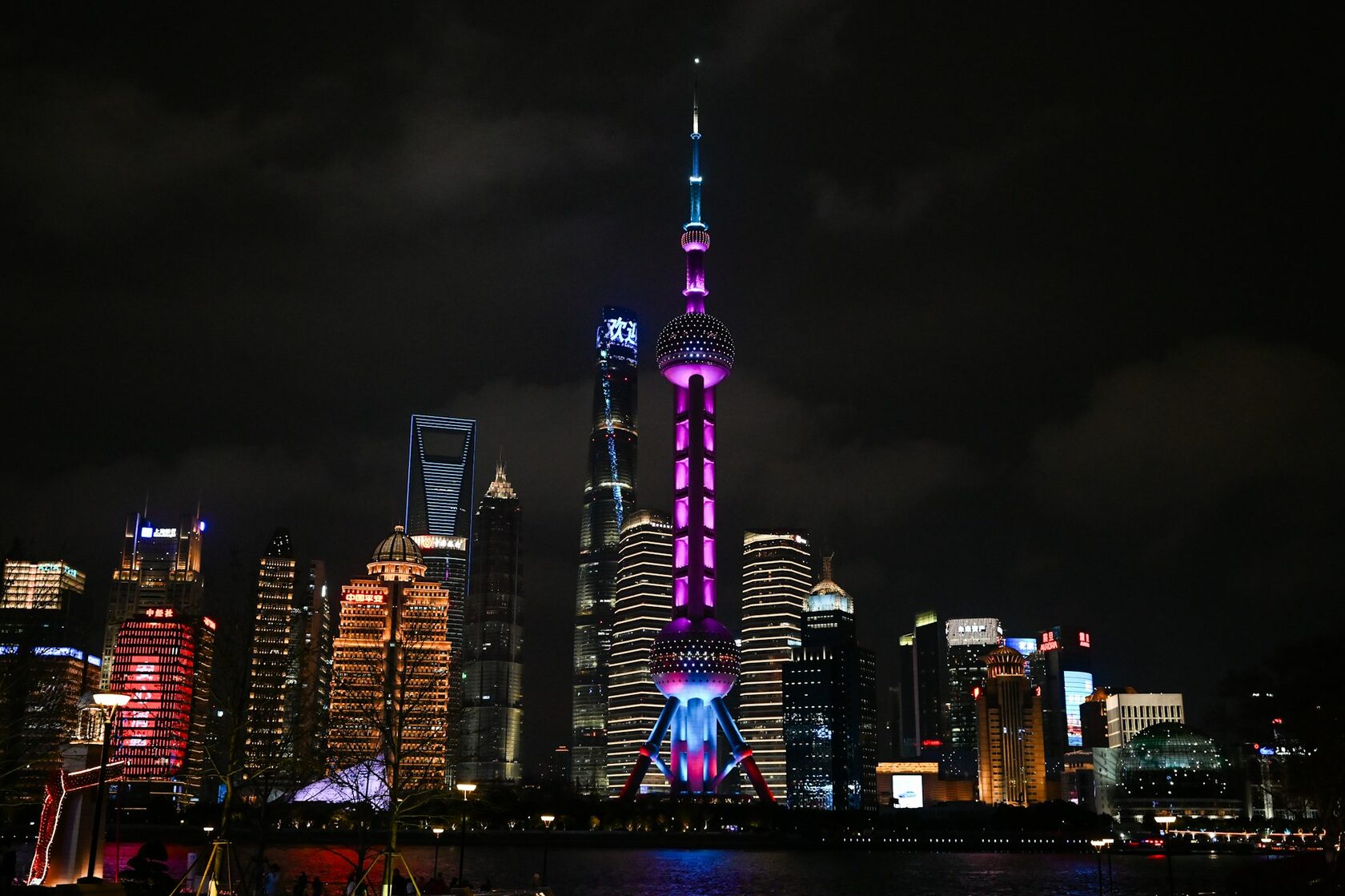
Oriental Pearl Tower
468 m · TV tower · 1994
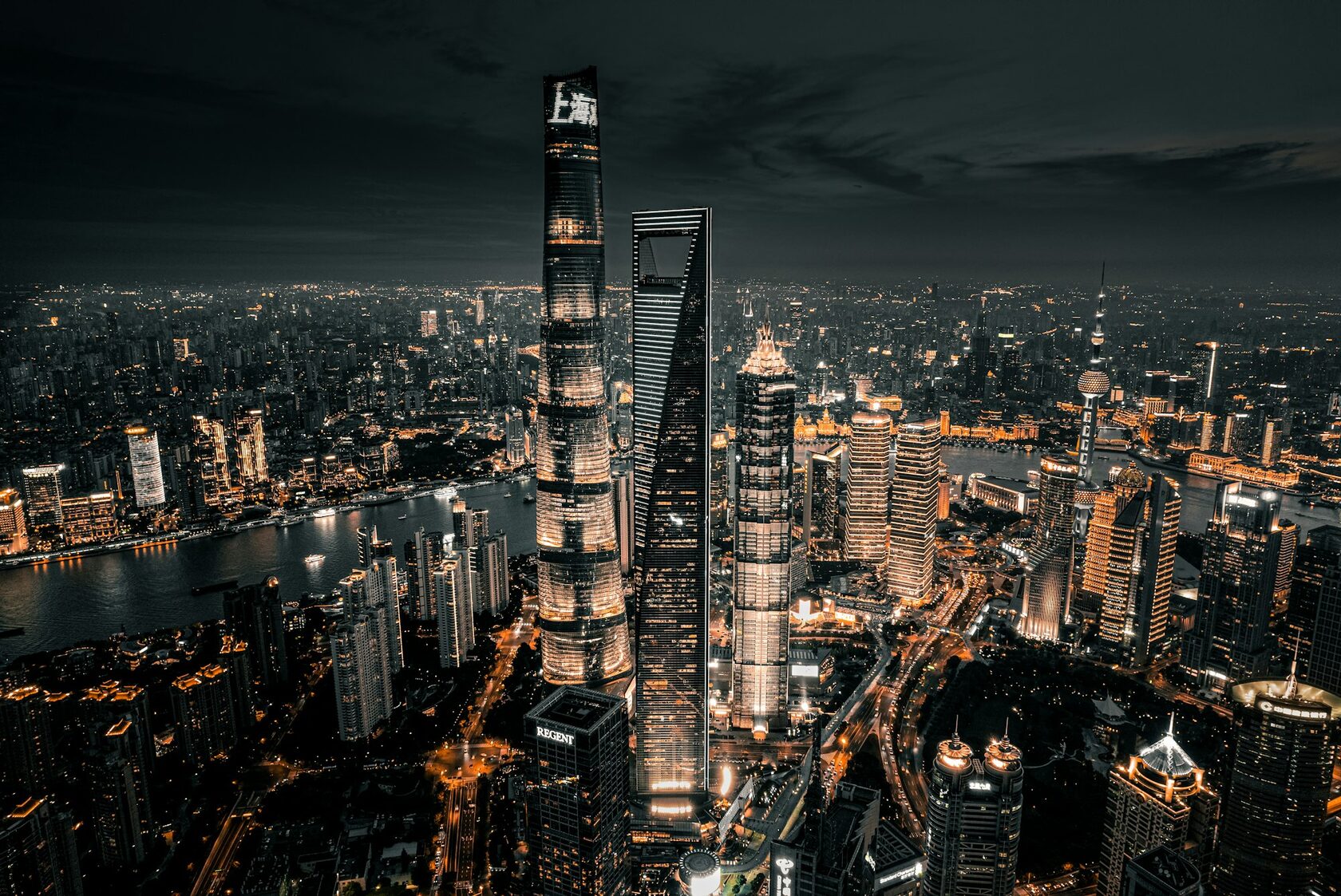
Explore the architecture, ambition, and extraordinary transformation of one of the world's most recognizable skylines — built in three decades on the eastern bank of the Huangpu.
In April 1990, China announced the development and opening-up of Pudong, setting in motion one of the most significant urban transformations in modern Shanghai. Located on the eastern bank of the Huangpu River, the formerly agricultural district was opened to foreign investment. Just four years later the Oriental Pearl TV tower rose in Lujiazui; in 2008 the Shanghai World Financial Center opened with a trapezoidal opening at its crown; and by 2015 the Shanghai Tower capped the new skyline at 632 metres.
Shanghai ranks among the world's major high-rise cities, with the Lujiazui district forming one of its most recognisable clusters of landmark towers. Known as the "mouth of the Lu family river", Lujiazui has become the financial centre of East Asia, where bank headquarters sit alongside observation decks, museums and hotels.
Between 1994 and 2015, four landmark towers transformed a former agricultural district into one of the most recognisable skylines of the 21st century. Editorial fact · Shanghai skyline
1994
468 m · TV tower · 1994
1999
420.5 m · 88 floors
2008
492 m · 101 floors
2010
259.9 m · 56 floors
2015
632 m · 128 floors
Four key structures in and around the Lujiazui district — from China's tallest tower to an icon of the 1990s. The skyscrapers are clustered within the financial district, while the Oriental Pearl TV Tower stands closer to the eastern bank of the Huangpu.
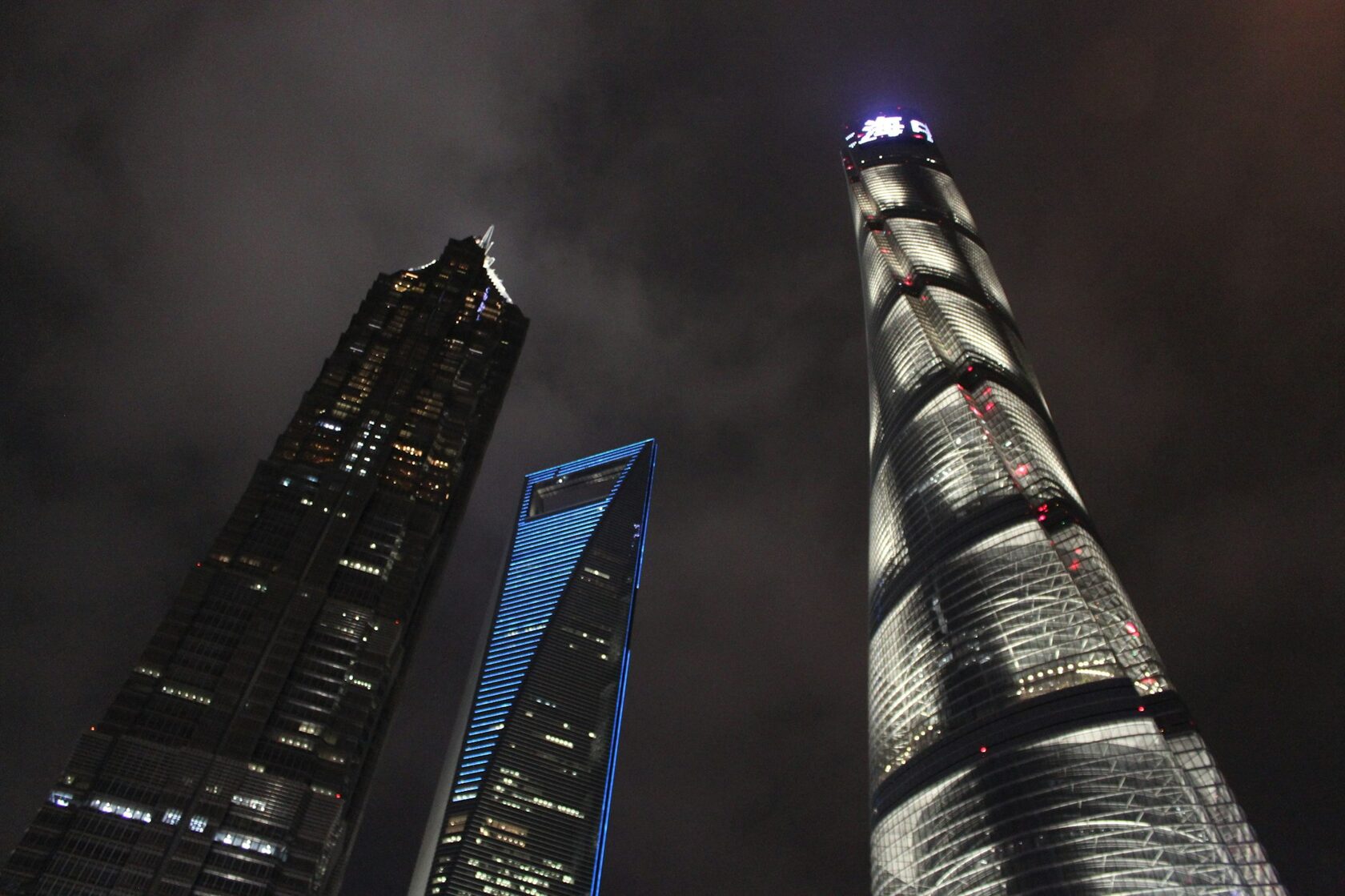 No. 01 · Tallest
上海中心大厦 · Shànghǎi Zhōngxīn Dàshà
The tallest building in China and the third-tallest completed building in the world. Its asymmetrical spiral form is engineered to reduce wind loads compared with a rectangular tower of the same height. The tower combines offices, elevated public spaces and hospitality functions. J Hotel Shanghai Tower occupies upper floors, with guest rooms on levels 86–98, while the observation deck on level 118 stands 546 m above ground.
 632 m Height
 128 Floors
 2008–2015 Construction
 Gensler Architect
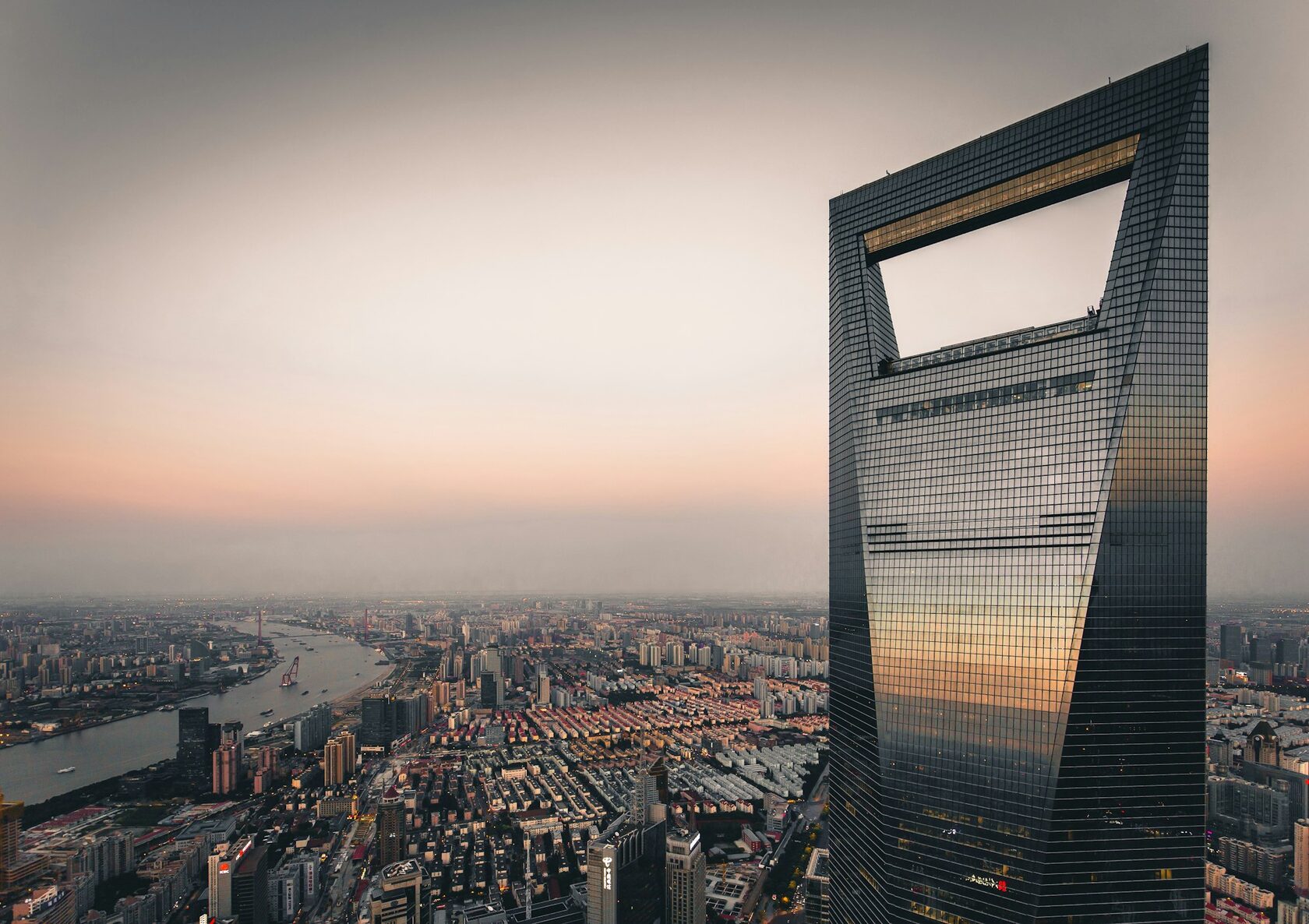 No. 02 · 492 m
上海环球金融中心 · Shànghǎi Huánqiú Jīnróng Zhōngxīn
A tower nicknamed "the bottle opener" for the trapezoidal opening at its crown. The original 1997 KPF design featured a circular aperture, but it was compared to the rising sun on the Japanese imperial flag — the project was funded by Japan's Mori Building, and the shape caused public debate in mainland China. The circle was replaced with a trapezoid before construction. Floors 79 to 93 house the Park Hyatt Shanghai, which became one of the world's highest hotels when the building opened in 2008.
492 m Height 101 Floors 2008 Opened Kohn Pedersen Fox Architect 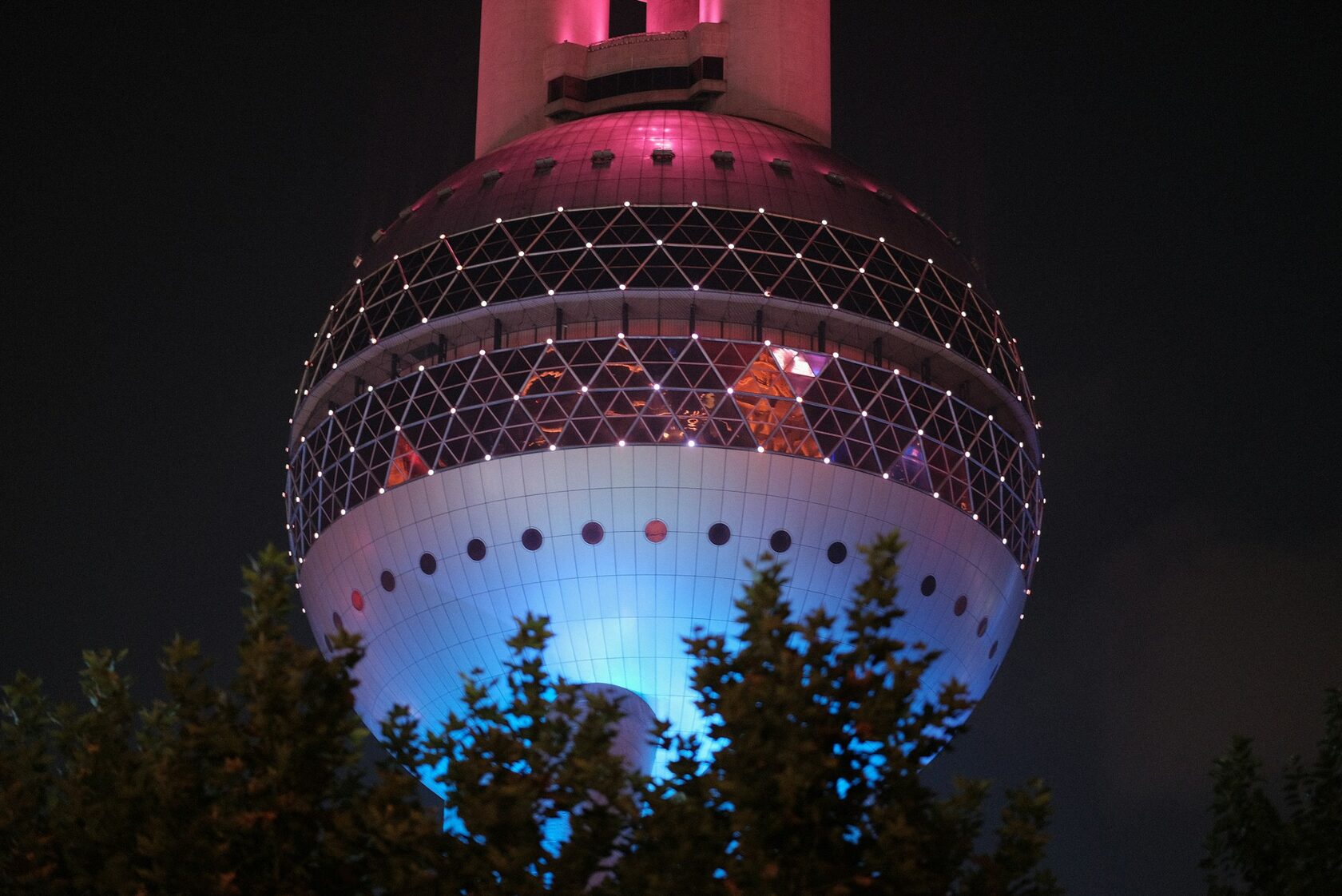 No. 03 · Icon of the 1990s
东方明珠广播电视塔 · Dōngfāng Míngzhū Guǎngbō Diànshì Tǎ
The first Lujiazui landmark, completed in 1994 and opened to the public in 1995. A telecommunications and observation tower with three large spheres and several smaller decorative orbs. The largest sphere sits at around 263 m; the upper observation deck, known as the Space Capsule, is at approximately 351 m. It was China's tallest structure from 1994 until 2007. Inside the spheres are a revolving restaurant, a museum of Shanghai history and an observation deck with a glass floor.
468 m Height  350 m Observation deck 1994 Opened Jiang Huancheng / East China Architectural Design & Research Institute Architect
 No. 04 · Neo-feng shui
金茂大厦 · Jīn Mào Dàshà
An octagonal skyscraper whose proportions echo traditional Chinese pagodas. Architect Adrian Smith (Skidmore, Owings & Merrill) wove feng-shui principles into the structure: 88 floors — a lucky number in Chinese numerology — and an octagonal plan symbolising prosperity. Inside, the Grand Hyatt opens onto a 33-storey atrium at the centre of the building.
420.5 m Height 88 Floors 1999 Opened SOM · Adrian Smith Architect 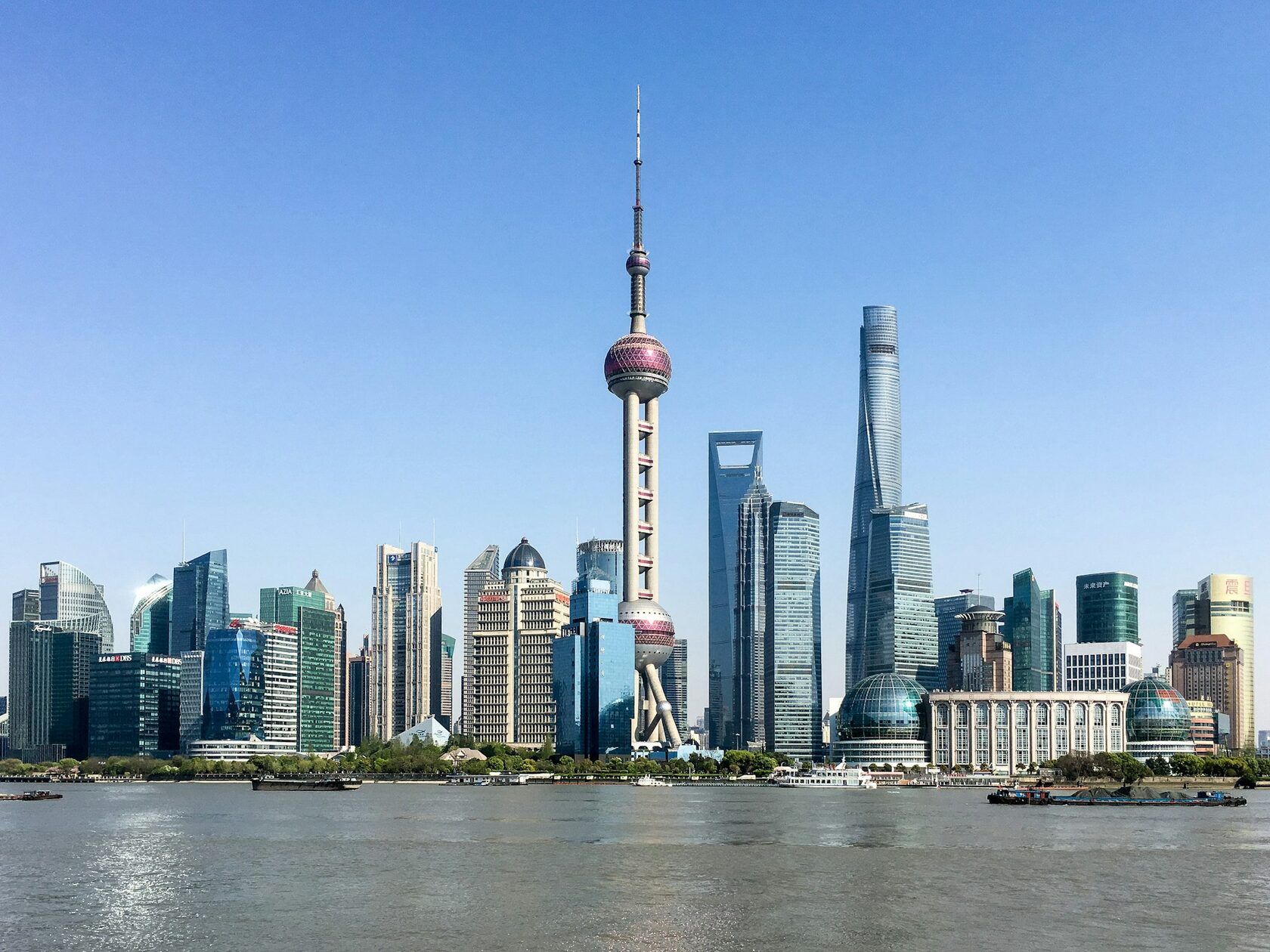
The site collects building profiles from cities around the world. Use the links below to open neighbouring regional catalogues or browse the full index.