Shenzhen Skyscrapers & Architecture | Skyscrapers Info
Panorama of Shenzhen's high-rise development
City Profile

ShenzhenA City of Vertical Growth

Shenzhen is one of China's major centers of high-rise development. Its skyline is shaped by distinct business districts that emerged during different stages of the city's transformation — from historic Luohu and central Futian to the technology-driven Nanshan district and the expanding Qianhai development zone.

Country China · Guangdong
Special Economic Zone since 1980
Tallest Completed 599.1 m
Chapter 01 · Context

A City of Multiple Business Districts

Shenzhen is a Special Economic Zone in which several high-rise centers have emerged at different times and with different characters.

Shenzhen became one of China's first Special Economic Zones in 1980. Over the following decades it grew into a major metropolis, home to offices of technology corporations, financial institutions and research centers. High-rise construction here developed in waves — from the first 300-meter towers of the 1990s to the contemporary clusters of the 2010s and 2020s.

Rather than being concentrated in a single central business district, Shenzhen's skyline extends across several distinct commercial and urban centers. The historic Luohu at the border with Hong Kong, the central Futian with its governmental and financial core, the technology-driven Nanshan in the west, together with the new Qianhai development zone and the Houhai waterfront, each lend the city its own skyline character.

Today, Shenzhen remains one of the principal venues for high-rise architecture in Asia: record-breaking buildings have been completed here, and the local design community works in close collaboration with research institutes in Hong Kong and mainland China.

18.25million Permanent resident population at the end of 2025
1,997km² Total area of the city
18 Metro lines at the end of 2025
Chapter 02 · Landmark Towers

Shenzhen's Landmark Towers

Four buildings reflecting different stages in the formation of the city's skyline — from the 1990s to the late 2010s.

4 landmark towers
Flagship · No. 01

Architectural silhouette illustration. A verified photograph of the building is not currently displayed.

Ping An Finance CentreFutian · 2017

Shenzhen's tallest completed building. Its tapered glass curtain wall is engineered to withstand the typhoon loads common to the region. The base incorporates a public atrium that connects the tower's lobby to a metro station and a retail concourse.

Height 599.1 m
Floors Above Ground 115
Architect KPF
Completed 2017
No. 02

Architectural silhouette illustration. A verified photograph of the building is not currently displayed.

KK100Luohu · 2011

Until the completion of Ping An Finance Centre, KK100 was Shenzhen's tallest building. Its curved silhouette with an arched crown stands out within the Luohu skyline. The tower combines office space with The St. Regis Shenzhen hotel.

Height 441.8 m
Floors Above Ground 98
Architect TFP Farrells
Completed 2011
No. 03

Architectural silhouette illustration. A verified photograph of the building is not currently displayed.

China Resources TowerHouhai, Nanshan · 2018

Headquarters of China Resources in the Houhai area, on the western side of Nanshan. The tower is primarily an office building and forms part of a larger mixed-use complex with retail and hotel functions. Its tapered, faceted silhouette reduces wind loads, with a distinctive crystalline element at its crown.

Height 392.5 m
Floors Above Ground 68
Architect KPF
Completed 2018
No. 04

Architectural silhouette illustration. A verified photograph of the building is not currently displayed.

Shun Hing SquareLuohu · 1996 · also known as Diwang Tower

One of the earliest skyscrapers in Shenzhen exceeding 300 m. Also known as Diwang Tower. The tower is primarily an office building and forms part of an ensemble with the surrounding complex; at its base sits a retail podium. Located in the Luohu district at the border with Hong Kong.

Height 384 m
Floors Above Ground 69
Architect ADA · K.Y. Cheung
Completed 1996
Chapter 03 · Geography

Shenzhen's Clusters: From West to East

Shenzhen's high-rise clusters are arranged from west to east. To the west lie the technology-driven Nanshan and the Qianhai zone; at the center stands the business district of Futian; to the east lies historic Luohu at the border with Hong Kong.

Chapter 04 · Architectural Approach

Engineering Shenzhen's Skyline

Wind Engineering

Shenzhen sits within the typhoon belt of the South China Sea. The Ping An Finance Centre and China Resources Tower address this challenge through tapered profiles and chamfered corners that reduce wind pressure on their upper levels.

Climate

Structural Systems

For towers above 400 m, mega-columns, composite steel-concrete cores and multi-level outrigger trusses are used. In Ping An Finance Centre, this system distributes loads between the core and the perimeter and provides stability under typhoon wind events.

Structure

Mixed-Use Programs

Shenzhen's landmark towers are primarily office buildings, with their surroundings shaped by retail concourses, hotels and observation decks. KK100 and Shun Hing Square form mixed-use complexes integrated with a varied urban fabric.

Program

Transport Integration

The Shenzhen Metro operates 18 lines as of the end of 2025, linking the major business clusters across the city. The SkyShuttle monorail serves the northeastern Pingshan district. Many tower lobbies are integrated with metro stations and underground passages.

Infrastructure
Chapter 05 · High-Rise Districts

Three Administrative Districts and a Development Zone

Shenzhen comprises nine administrative districts. The high-rise clusters are concentrated in three of them — Luohu, Futian and Nanshan. The Houhai waterfront is located within Nanshan; the Qianhai development zone, expanded in 2021, includes areas of both Nanshan and Bao'an.

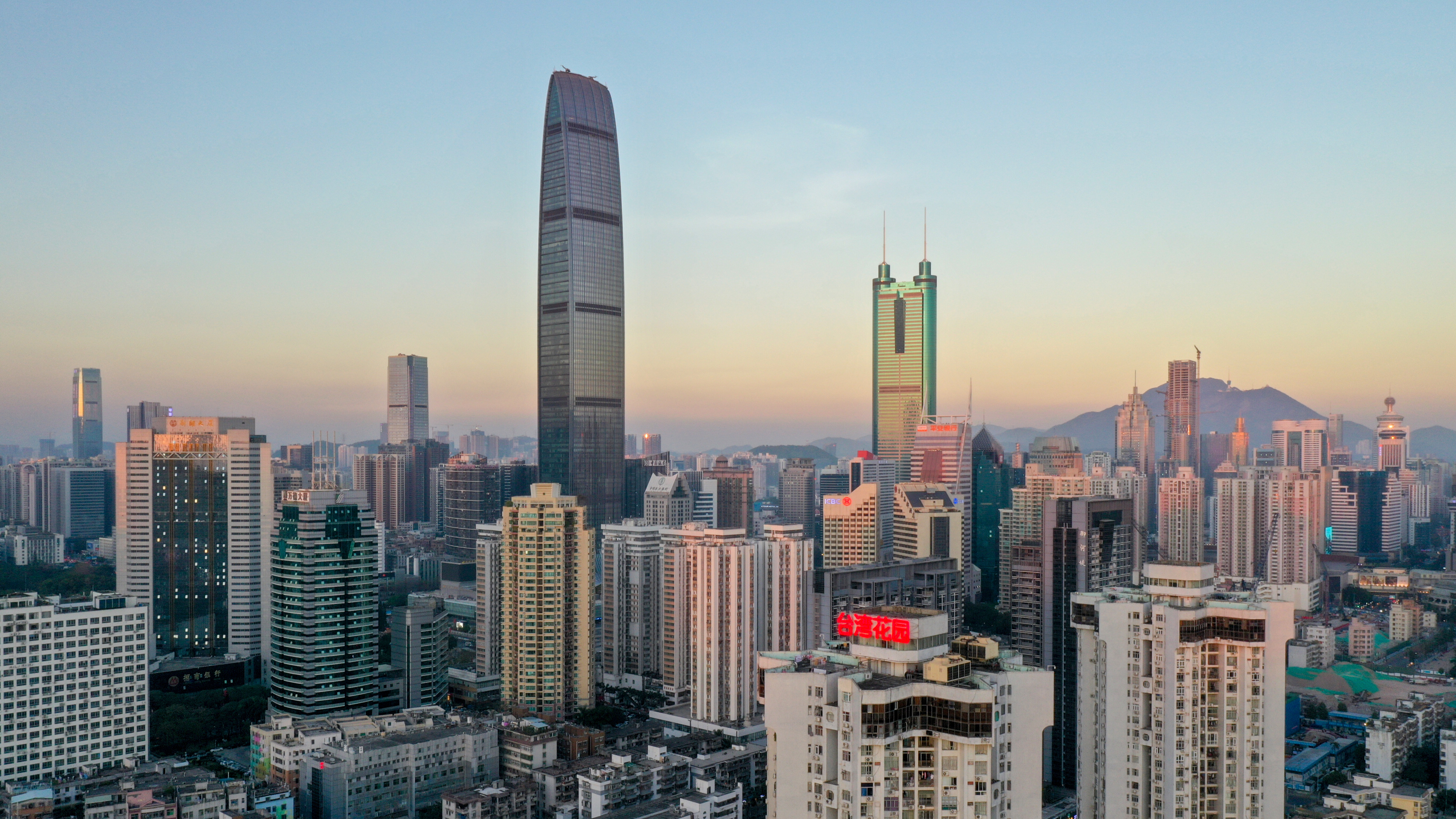
Historic Center Shenzhen panorama featuring KK100 and Shun Hing Square

Photo: Charlie fong / Wikimedia Commons · CC BY-SA 4.0 (cropped)

Luohu罗湖 · district at the border with Hong Kong

Shenzhen's historic administrative and commercial center. In the mid-1990s it saw the city's first buildings exceeding 300 m. The cluster forms the eastern part of the skyline, facing Hong Kong.

  • KK100TFP Farrells 441.8 m
  • Shun Hing SquareADA · K.Y. Cheung 384 m
First 300 m+ skyscraper 1996
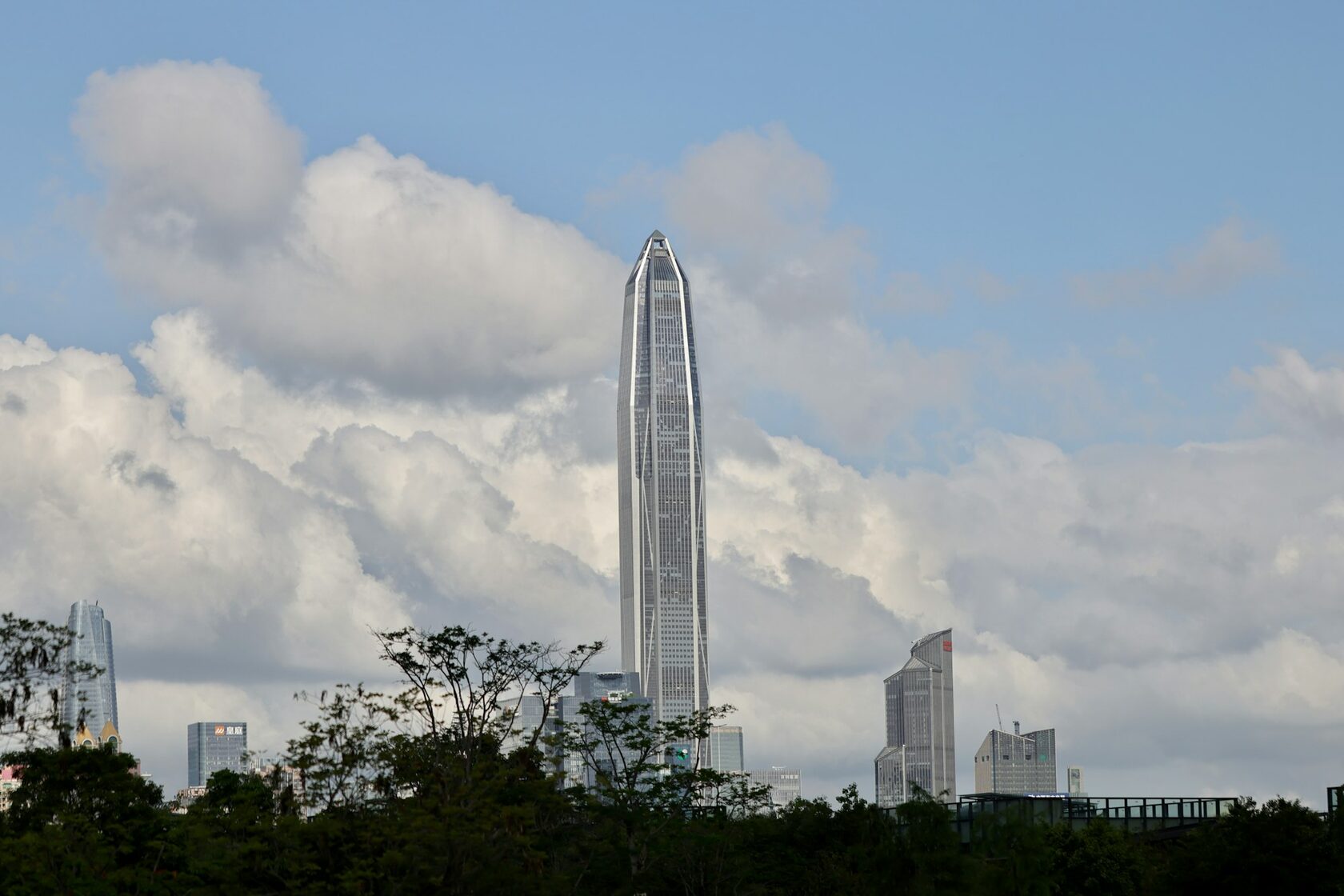
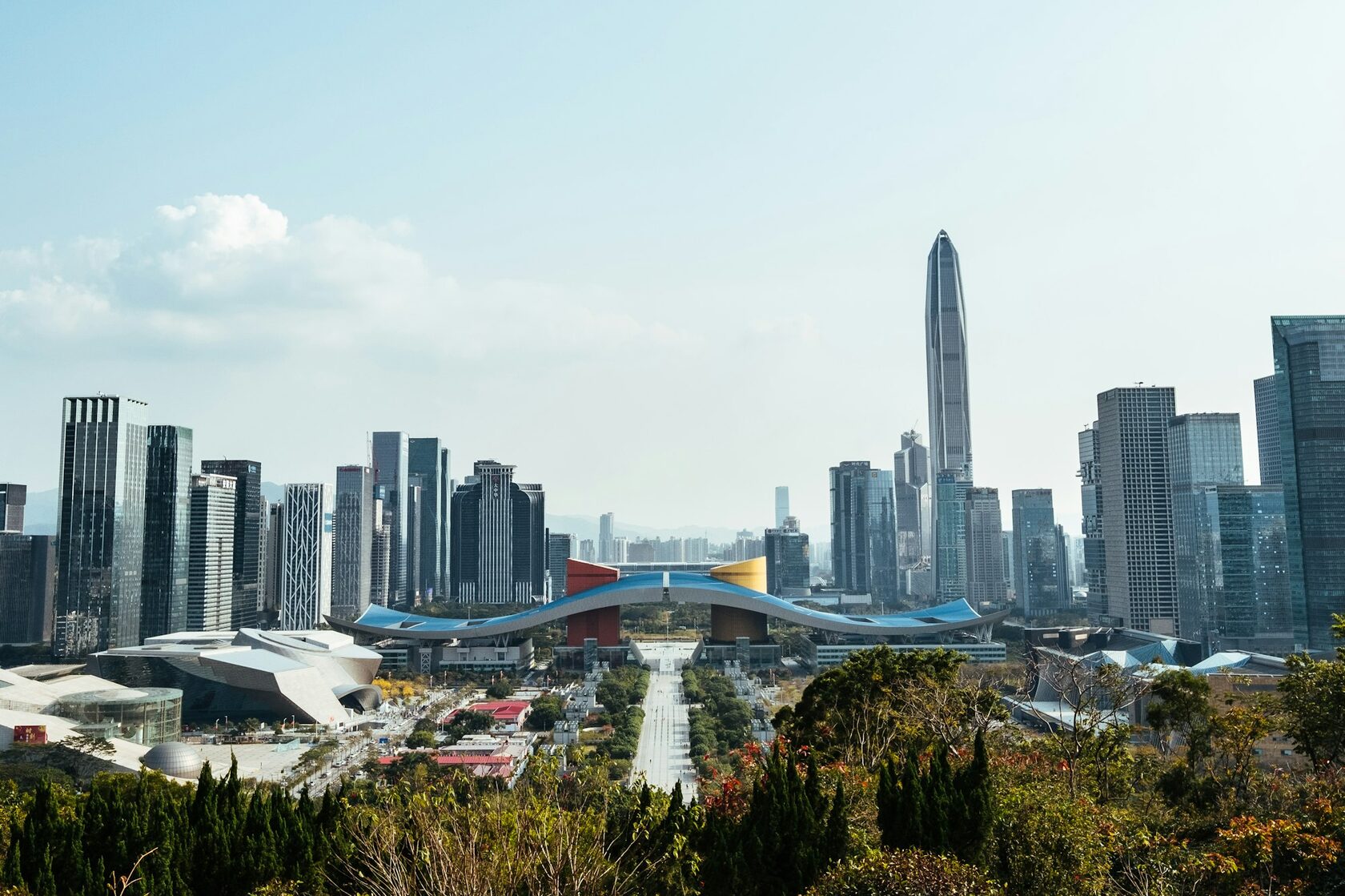
Central Business District Panorama of Shenzhen's central business district

Futian福田 · central business district

The central business district, developed in the 2000s as Shenzhen's new governmental and financial core. It houses government quarters, the headquarters of financial companies and stations linking Futian with Hong Kong.

  • Ping An Finance CentreKohn Pedersen Fox 599.1 m
Main vertical of the city 2017
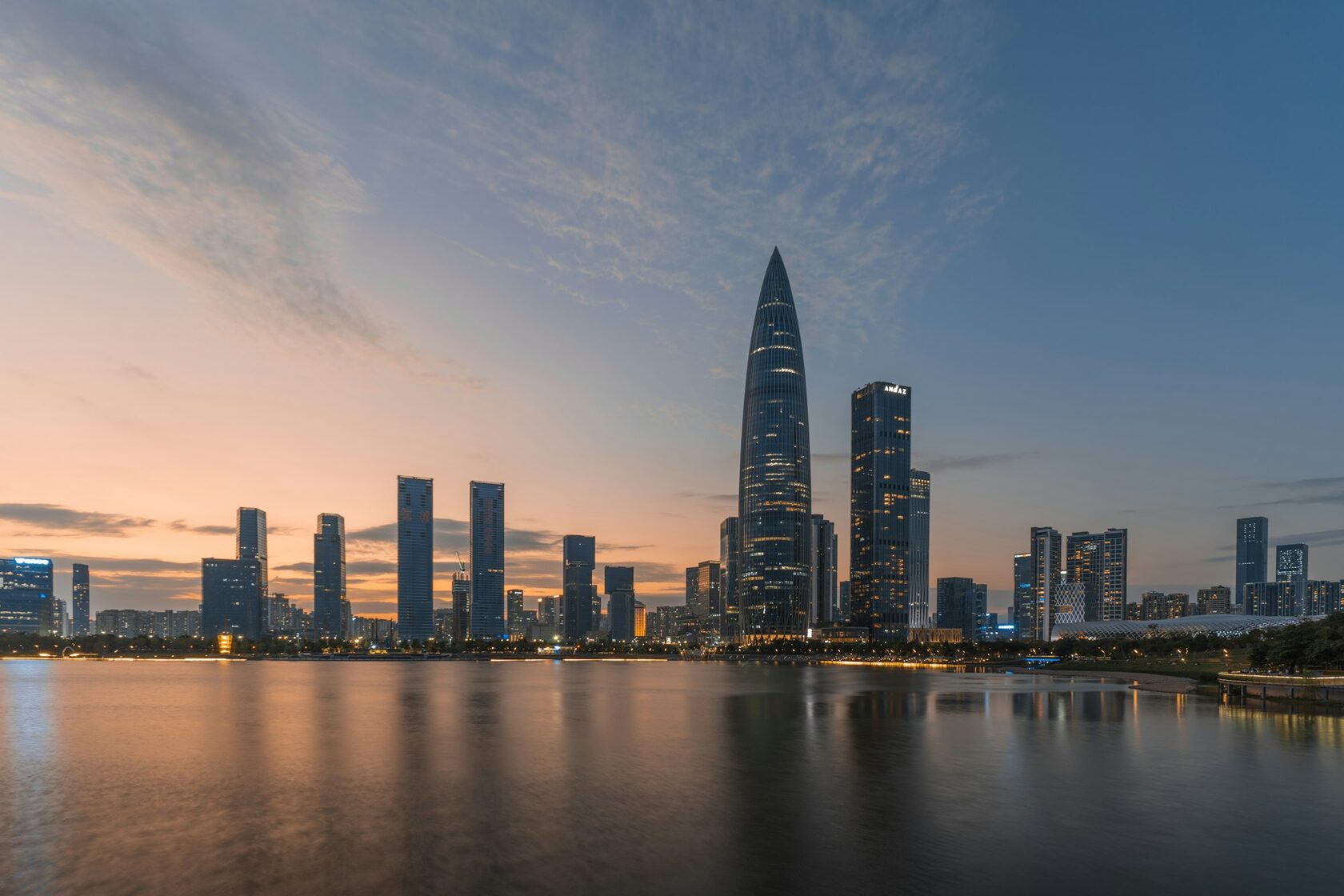
Technology Belt Panorama of Nanshan district and the Houhai waterfront

Nanshan南山 · Houhai and the Qianhai zone

A large western district that includes the Houhai waterfront. The Qianhai development zone, expanded in 2021, encompasses parts of Nanshan and the neighboring Bao'an district — it is not confined to a single administrative district. Nanshan hosts the offices of technology companies and headquarters that have shaped the new wave of high-rise development since the 2010s.

  • China Resources TowerKohn Pedersen Fox 392.5 m
  • Tencent Binhai MansionNBBJ · with Tongji LDI 248 m
New wave of high-rises 2018
Chapter 06 · Explore More Cities

Explore More Cities and Skylines

The skyscrapersinfo.ltd archive covers dozens of megacities from Dubai to Toronto. Choose a city to explore its skyline, landmark towers and architectural context.